

Lime is a widely used industrial material in various sectors such as construction, water treatment, and agriculture. Proper storage of lime is crucial to maintain its quality and usability. One of the common challenges in lime storage is clumping, which can lead to reduced flowability, difficulty in handling, and even degradation of the lime's chemical properties. As a leading Lime Storage Silo supplier, we understand the intricacies of preventing lime from clumping in storage silos. In this blog, we will delve into the causes of lime clumping and provide effective strategies to mitigate this issue.
Causes of Lime Clumping in Storage Silos
Moisture Absorption
Lime is highly hygroscopic, meaning it has a strong affinity for water. When exposed to moisture in the air, lime reacts with water vapor to form calcium hydroxide through a process called slaking. This chemical reaction generates heat and causes the lime particles to stick together, resulting in clumps. Even a small amount of moisture can initiate this reaction, especially in a humid environment.
Compaction
During storage, the weight of the lime in the silo can cause compaction at the bottom layers. The pressure exerted by the upper layers of lime forces the particles closer together, reducing the void spaces between them. This compaction can lead to the formation of hard lumps, making it difficult to discharge the lime from the silo.
Temperature Fluctuations
Temperature changes can also contribute to lime clumping. When the temperature inside the silo fluctuates, the lime particles expand and contract. This repeated expansion and contraction can cause the particles to break and form smaller fragments, which are more likely to clump together. Additionally, temperature variations can lead to condensation inside the silo, introducing moisture and exacerbating the clumping problem.
Contamination
Contamination from foreign materials such as dust, dirt, or other chemicals can also cause lime to clump. These contaminants can act as binding agents, sticking the lime particles together. Moreover, if the silo is not properly cleaned before filling with lime, residual materials from previous loads can mix with the new lime and contribute to clumping.
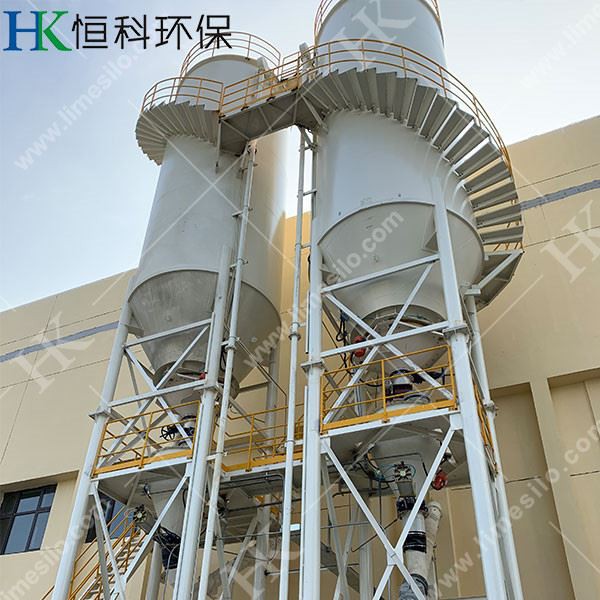

Strategies to Prevent Lime Clumping
Moisture Control
- Sealed Silo Design: Our Bulk Storage Silos for Lime are designed with airtight seals to prevent moisture from entering the silo. The use of high-quality gaskets and seals ensures that the silo remains impermeable to external humidity. Additionally, the silo is equipped with a ventilation system that allows for the controlled exchange of air, reducing the risk of condensation.
- Desiccant Usage: Placing desiccants inside the silo can help absorb any moisture that may enter. Silica gel or activated alumina are commonly used desiccants that can effectively remove water vapor from the air. These desiccants can be placed in mesh bags and distributed throughout the silo to ensure uniform moisture absorption.
- Humidity Monitoring: Installing humidity sensors inside the silo allows for real-time monitoring of the moisture levels. This enables timely intervention if the humidity exceeds the recommended range. Our Lime Storage Steel Silos can be equipped with advanced humidity monitoring systems that provide accurate and reliable data.
Proper Silo Design and Installation
- Conical Bottom Design: A conical bottom design is essential for preventing lime compaction. The conical shape allows the lime to flow smoothly towards the discharge outlet, reducing the pressure on the bottom layers. Our Bulk Storage Silos Lime System features a carefully engineered conical bottom design that ensures efficient discharge and minimizes the risk of clumping.
- Anti - Clumping Devices: Some silos are equipped with anti - clumping devices such as vibrators or air cannons. These devices can be activated periodically to break up any incipient clumps and promote the flow of lime. Vibrators can be attached to the silo walls to shake the lime particles loose, while air cannons release high - pressure air blasts to disrupt the clumps.
- Proper Installation: Ensuring that the silo is installed on a level surface and is properly anchored is crucial. A tilted or unstable silo can cause uneven distribution of the lime, leading to compaction and clumping. Our team of experts ensures that the silo is installed correctly, following all the necessary safety and quality standards.
Temperature Management
- Insulation: Insulating the silo can help minimize temperature fluctuations. By reducing the heat transfer between the inside and outside of the silo, insulation helps maintain a more stable temperature environment. This can prevent the expansion and contraction of the lime particles, reducing the risk of clumping.
- Thermal Monitoring: Installing temperature sensors inside the silo allows for continuous monitoring of the temperature. If the temperature deviates from the optimal range, appropriate measures can be taken, such as adjusting the ventilation or using heating or cooling systems.
Contamination Prevention
- Silo Cleaning: Before filling the silo with lime, it is essential to thoroughly clean the silo to remove any residual materials. This can be done using high - pressure water jets or compressed air. Regular cleaning of the silo during its service life also helps prevent the accumulation of contaminants.
- Filtration Systems: Installing filtration systems at the inlet and outlet of the silo can prevent dust and other foreign particles from entering the silo. These filtration systems can capture contaminants before they come into contact with the lime, ensuring its purity.
Conclusion
Preventing lime from clumping in a Lime Storage Silo is a multi - faceted challenge that requires a comprehensive approach. By addressing the causes of clumping, such as moisture absorption, compaction, temperature fluctuations, and contamination, and implementing effective prevention strategies, we can ensure that the lime remains in a free - flowing and usable state.
As a leading Lime Storage Silo supplier, we are committed to providing high - quality silos and innovative solutions to meet the specific needs of our customers. Our Bulk Storage Silos for Lime, Lime Storage Steel Silos, and Bulk Storage Silos Lime System are designed with the latest technology and industry best practices to prevent lime clumping and ensure efficient storage and handling.
If you are interested in learning more about our Lime Storage Silos or have specific requirements for your lime storage needs, we encourage you to contact us for a detailed discussion. Our team of experts is ready to assist you in finding the most suitable solution for your business.
References
- Smith, J. (2018). Lime Storage and Handling: Best Practices. Industrial Minerals Journal, 45(2), 34 - 42.
- Johnson, A. (2019). Moisture Control in Lime Storage Silos. Chemical Engineering Magazine, 56(3), 56 - 63.
- Brown, C. (2020). Temperature Management for Lime Storage. Agricultural and Industrial Storage Review, 67(1), 12 - 20.